Car Paint
Understanding automotive paint inside out — from the multi-layer structure to the environmental threats that can damage your vehicle's finish.
Car Paint Layers
Modern automotive paint is a complex multi-layer system — each layer serving a specific purpose from corrosion protection to gloss retention.
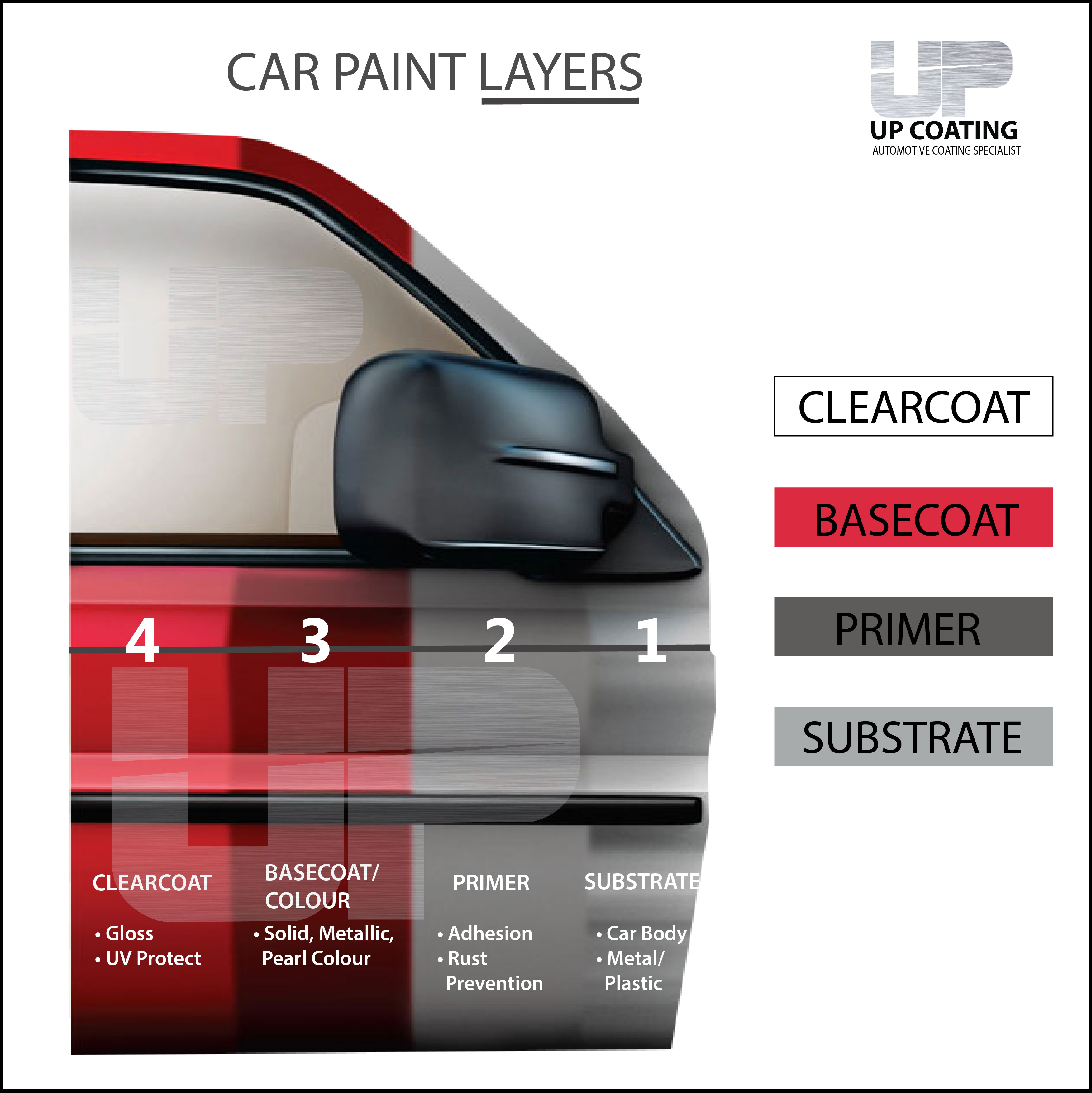
Electrocoat (E-Coat)
Rust protection applied via electro-deposition. This is the foundation layer bonded directly to the bare metal.
Primer
Surface levelling and stone chip resistance. Creates a smooth uniform base for the colour coat.
Basecoat
The colour layer — delivers pigmentation, metallic flakes, and effect materials that define the vehicle's appearance.
Clearcoat
The protective top layer — provides gloss, UV protection, and durability against environmental elements.
Enemies of Car Paint
Automotive paint faces numerous environmental threats that can degrade its appearance and protective properties over time.
UV Radiation
Causes fading, oxidation, and clearcoat degradation over time. Prolonged sun exposure breaks down the chemical bonds in paint.
Acid Rain
Chemical etching and watermark staining. Acidic pollutants bond with moisture and leave permanent marks on unprotected paint.
Bird Droppings
Highly acidic compounds that etch into the clearcoat within minutes. Immediate removal is essential to prevent permanent damage.
Tree Sap
Sticky resin that bonds aggressively to paint surfaces. If left untreated, it hardens and becomes increasingly difficult to remove.
Road Salt & Chemicals
Corrosive agents that accelerate rust formation and chemically degrade paint films, especially on the undercarriage.
Scratches & Swirls
Mechanical damage from improper washing techniques, abrasive materials, or automatic car washes with contaminated brushes.
Protecting Your Paint Finish
Simple habits and best practices to keep your vehicle's paint looking its best for years to come.
Regular Washing
Wash your vehicle every two weeks using the two-bucket method to minimize swirl marks.
Wax & Seal
Apply a quality wax or ceramic sealant every 3 months to maintain a protective barrier.
Park in Shade
Whenever possible, park in covered or shaded areas to reduce UV exposure and heat damage.
Immediate Cleanup
Remove bird droppings, tree sap, and insect residue promptly to prevent chemical etching.
Explore More
Technical Guides
Browse our complete library of technical resources — from paint defect diagnosis to spraying troubleshooting.